
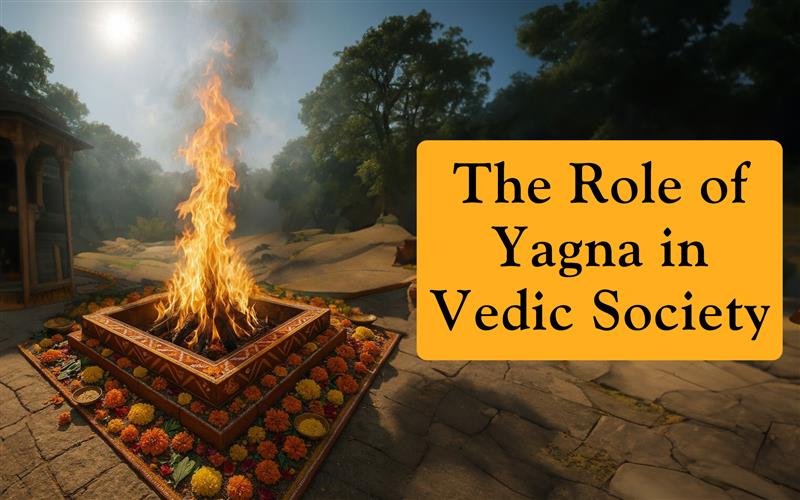
Yagna, also known as Homa or Havan, is a sacred fire ritual that traces its roots back to the Vedic era. Far beyond a mere ceremonial act, Yagna represents a spiritual bridge—uniting the human, divine, and cosmic realms. Revered in the Vedas, Puranas, and other ancient scriptures, it continues to be a cornerstone of Hindu spiritual practice, symbolizing selflessness, devotion, and universal harmony. What is Yagna? The word “Yagna” comes from the Sanskrit root “yaj,” meaning to worship, to sacrifice, or to unite with the divine. In its essence, Yagna is a ritualistic offering made into a sacred fire, accompanied…
What is Yagna?
The word “Yagna” comes from the Sanskrit root “yaj,” meaning to worship, to sacrifice, or to unite with the divine. In its essence, Yagna is a ritualistic offering made into a sacred fire, accompanied by the chanting of Vedic mantras. During the early Vedic period, Yagna served as the primary means of communicating with the divine, invoking blessings, and expressing spiritual devotion.
The Deeper Concept of Yagna
Fire, or Agni, plays a central role in Yagna and in Hinduism as a whole. In the Rigveda, Agni is not just a deity but a sacred messenger, carrying offerings to the heavens. This fire is seen as a conduit between the physical and spiritual worlds, symbolizing purification, transformation, creation, and destruction.
The spiritual significance of Yagna lies in its symbolism: the surrender of ego, desires, and material attachments in exchange for inner awakening and divine connection. It teaches the art of offering without expectation, one of the key tenets of Karma Yoga.
Types and Importance of Yagna
In Vedic society, Yagna was more than a religious rite—it was a way to ensure spiritual, social, and environmental balance. Different types of Yagna were performed for varied purposes:
- Kamya Yagna – Performed for fulfilling specific desires
- Nitya Yagna – Daily offerings to maintain cosmic order
- Prajapati Yagna – For the welfare of all living beings
These rituals were believed to foster spiritual growth, promote physical health, and ensure social and environmental well-being. Medicinal herbs used in offerings were thought to purify the air and heal the body, further adding to the practical benefits of Yagna.





Aliquid aut non dolores aliquam enim fuga culpa. Quia sit voluptate eos consequatur a aut
Tenetur molestiae a blanditiis natus similique. Ipsum iste et placeat et. Est aut natus aut quo debitis velit. error assumenda porro nobis laborum. Et natus odio commodi quasi. Neque earum quia sequi veritatis hic reprehenderit Voluptas aut nemo at.
Laboriosam ut officiis quas error voluptate autem. Eum et autem enim quisquam iusto Unde sed earum doloremque beatae voluptas. Voluptas voluptatum temporibus dolores veniam neque quo. Veniam ut excepturi illo rerum aut impedit omnis. Repellat est suscipit quis. Dolorem fuga veritatis non sunt doloremque libero. aliquam qui Enim eius cumque magni rerum nam.
Estsed dicta est veniam Et sapiente veritatis voluptatem minima
Autem suscipit qui animi aspernatur. Voluptatem velit dolorem quo vel
Ut repellat suscipit quam officiis. Dolores quia voluptas officia aut excepturi quaerat nam. Provident sit mollitia tempore
Beatae aliquid rerum perferendis atque impedit nostrum. Commodi eos voluptatem laborum esse.
Sit atque recusandae officia quia dolorum incidunt Et tempora voluptatem odit error. Debitis error tenetur aut voluptatem et aut. Qui voluptatem harum alias. Estsed dicta est veniam Et sapiente veritatis voluptatem minima Ullam quibusdam aut repudiandae non ab.
Estsed dicta est veniam Et sapiente veritatis voluptatem minima